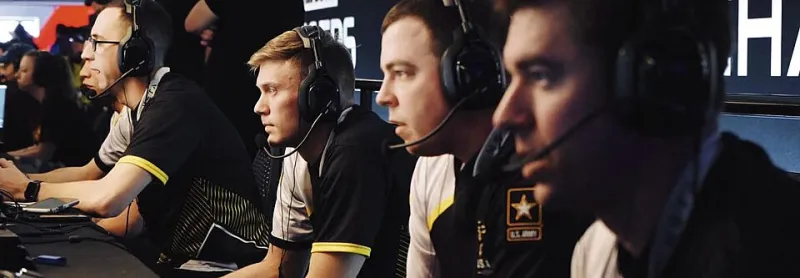
Stop Blaming Your Aim, Start Blaming Your Setup: The Real Cost of Gear Obsession
Let's be honest for a second. You've watched the YouTube reviews. You've read the Reddit threads. You've spent more time researching mechanical switches than you have reviewing your own gameplay footage. And somewhere along the way, you convinced yourself that the reason you're stuck in Gold or Platinum is because your mouse polling rate is 500Hz instead of 8000Hz.
It's not.
The competitive gaming gear industry in the United States is a multi-billion dollar machine built on one core premise: that marginal hardware improvements will unlock your hidden skill. Spoiler alert — they won't. But here's the twist. Understanding why they won't is actually the key to figuring out which upgrades genuinely matter for your specific situation.
The Input Lag Illusion
Input lag gets thrown around constantly in gear discussions, but most players have no idea what the numbers actually mean in practice. Your monitor's response time, your USB polling rate, your router's latency to the game server — all of these stack together into a total input chain. A 1ms monitor sounds incredible until you realize your USB hub is adding 8ms and your ISP is giving you 40ms ping on a good day.
Here's the real talk: the human brain starts perceiving input lag somewhere around 13–20ms. Below that threshold, you're not consciously registering the delay. So that premium gaming monitor advertising 0.5ms response time? You physiologically cannot tell the difference between that and a solid 5ms panel — not in actual gameplay, not under pressure, not ever.
What does matter is your total chain consistency. Inconsistent latency, sometimes called jitter, is far more disruptive than a slightly higher but stable lag. A budget 144Hz monitor with rock-solid frame delivery will outperform a 360Hz panel running on a stuttering GPU every single time.
Refresh Rate: Where the Real Gains Live (Up to a Point)
This one actually has merit — but with a ceiling most players blow past without thinking.
Going from 60Hz to 144Hz is a legitimate, noticeable upgrade. Studies in human visual perception consistently show that the jump from 60 to 144 frames per second produces measurable improvements in target tracking and reaction time. This is real. This is worth spending money on.
Going from 144Hz to 240Hz? Meaningful for some, especially in fast-twitch games like Valorant or CS2 where tracking enemies around corners is critical. The benefit exists, it's just smaller.
Going from 240Hz to 360Hz? At this point, you're paying premium prices for improvements that are essentially invisible to all but the absolute top 0.1% of players. Unless you're playing at a level where a few milliseconds of visual advantage is the actual deciding factor in matches — and if you're reading this article, you're probably not — that money is better spent elsewhere.
The sweet spot for most US competitive players grinding ranked in 2024 is a 1080p or 1440p monitor in the 144–240Hz range from brands like ASUS, LG, or BenQ. You can find solid options in the $200–$350 range that will genuinely serve you.
Your Mouse Doesn't Know You're Bad
No mouse manufacturer will say this out loud, but here it is: a $30 Logitech G203 and a $160 Logitech G Pro X Superlight 2 will produce nearly identical in-game results for the vast majority of players.
The sensor technology gap between budget and premium mice closed dramatically around 2019. Most mice at the $30+ price point now run sensors that are accurate well beyond what human wrist and arm movement can actually exploit. The differences come down to weight, shape, and build quality — all of which are legitimate considerations, but none of which are performance multipliers.
What is a performance multiplier? Mouse grip style matched to mouse shape. A claw grip player forcing themselves to use a palm-grip mouse is actively fighting their natural mechanics. This is the ergonomic ROI conversation that never gets enough airtime. Spending an hour researching your grip style and finding a mouse shape that matches it will do more for your aim than any sensor upgrade.
Same logic applies to mousepads. A larger surface area is genuinely useful if you're a low-sensitivity player with wide arm sweeps. A textured control pad versus a speed pad changes how micro-corrections feel. These are real variables — but they're about your body and your habits, not about prestige branding.
The Peripheral Audit You Actually Need
Instead of asking "what's the best gear," start asking "what's limiting me specifically." Here's a quick framework:
Check your monitor first. If you're below 144Hz, that's your highest-priority upgrade. Everything else is secondary.
Audit your input chain. Use tools like RTSS (RivaTuner Statistics Server) to check frame timing consistency. If your frames are stuttering, no peripheral upgrade fixes that — you need to address your GPU settings or in-game graphics configuration.
Identify your grip style. YouTube has solid guides on palm, claw, and fingertip grip identification. Match your next mouse purchase to your natural mechanics, not to what your favorite streamer uses.
Test before you invest. Best Buy locations across the US often have display units you can actually handle. Chain that with return policies and you can test real-world feel before committing.
Accept diminishing returns. Once your total setup is in the 144Hz, stable-frame, ergonomically-matched zone, additional gear spending has almost no competitive impact. Redirect that money toward coaching, VOD review tools, or simply more intentional practice time.
The Real Investment
The players who consistently climb ranked aren't the ones with the flashiest battlestations. They're the ones who understand their tools well enough to stop blaming them. Know your hardware's actual ceiling, optimize within it, and spend the mental energy you've been burning on gear research on something that actually scales with effort: your decision-making, your positioning, your game sense.
Your setup should be a solved problem, not an ongoing obsession. Solve it once, solve it smart, and get back to the part that actually matters — playing better.