Inside the War Room: How Elite Esports Teams Build Practice Schedules That Actually Win Championships
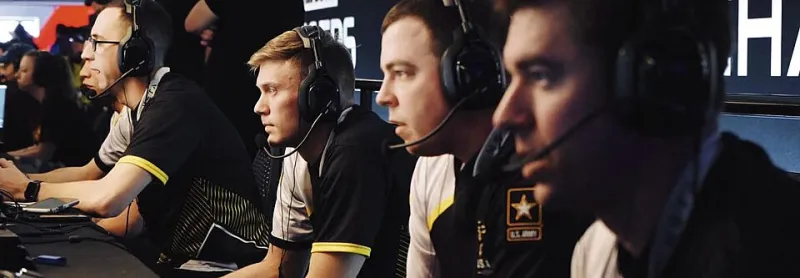
Photo: U.S. Army, Public domain, via Wikimedia Commons
Everybody wants to grind. Not everybody knows how to grind. That's the difference between a team that logs 10 hours a day and still flames out in group stages versus one that practices half as much and walks out with a trophy. The secret isn't hustle — it's structure.
Professional esports organizations have quietly built some of the most sophisticated training systems in competitive sports. And while most of us aren't getting signed to a T1 or Cloud9 roster anytime soon, the frameworks these teams use are absolutely replicable at the amateur and semi-pro level. Let's break it down.
The Anatomy of a Pro Practice Day
Forget the stereotype of pros just queuing ranked for 16 hours straight. Top-tier teams treat their schedule more like an NFL training camp than a casual gaming session. A typical day at a serious organization is divided into distinct blocks, each with a specific purpose.
Mornings usually kick off with individual skill work — think mechanical drills, aim trainers, or game-specific warmup routines. This isn't optional fluff. Just like a basketball player shoots free throws before practice, competitive players need to prime their reflexes before the real work begins. Most pros spend 30 to 60 minutes here before the team even gets on comms together.
The meat of the day is scrim blocks. These are structured practice matches against other professional or semi-professional teams, and they're treated with the same seriousness as tournament games. Typically, teams run two to three scrim blocks per day, each lasting two to three hours with mandatory breaks in between. Burnout is real, and smart organizations build rest into the schedule rather than treating it as weakness.
After scrims comes arguably the most underrated part of the entire process: the review session.
VOD Review Isn't Optional — It's the Whole Point
Here's a hard truth: if you're not reviewing your gameplay with the same intensity you're playing it, you're leaving half your improvement on the table. Pro teams spend anywhere from one to two hours per scrim block breaking down footage. Not just the losses, either. Wins get dissected just as hard, because winning bad habits are still bad habits.
Coaches and analysts will timestamp specific moments — a missed rotation, a poor draft decision, a communication breakdown — and bring them up in group review. The goal isn't to blame players. It's to build a shared mental model of what went wrong and create a repeatable fix.
For amateur teams looking to implement this, you don't need a professional analyst suite. A Discord call, a saved replay, and a willingness to be honest is all it takes. Start small: pick three moments per session to review as a group. That's it. Three moments, discussed openly, with actionable takeaways. Do that consistently and you'll be shocked how fast your team's ceiling rises.
Role-Specific Drills: Training the Individual Within the Team
One of the most overlooked aspects of professional practice is how much time gets dedicated to individual role development outside of team scrims. A support player has completely different mechanical and decision-making needs than a carry or an IGL (in-game leader). Treating everyone's training the same is a fast track to mediocrity.
Top organizations will often break their roster into role-specific groups for dedicated drill sessions. Junglers in a MOBA might run pathing efficiency drills. Riflers in a tactical shooter might work on specific spray patterns or entry sequences. IGLs might spend time reviewing opponent demos and building out call libraries.
The principle here is deliberate practice — a concept straight out of sports science. You're not just repeating actions. You're isolating specific weaknesses, applying focused effort, and measuring improvement. It's less fun than just queuing up, but it's dramatically more effective.
Mental Conditioning: The Part Most Teams Skip
Physical and technical training only gets you so far. The teams that consistently perform in high-stakes tournament environments have one more layer in their system: mental conditioning.
This isn't about motivational speeches. It's systematic. Elite organizations work with sports psychologists or performance coaches to build routines around focus, tilt management, and pressure performance. Pre-match rituals, breathing techniques, and structured cooldown periods after tough losses are all part of the toolkit.
For amateur players, the entry point here is simpler than you'd think. Start with a consistent pre-session routine — same music, same warmup, same mindset check. It sounds basic because it is, but consistency creates the psychological scaffolding that holds up when tournament nerves kick in. The players who choke under pressure usually haven't built that scaffolding in practice.
Building Your Own Version of the System
You don't need a coaching staff, a team house, or a six-figure salary to implement these principles. Here's a stripped-down version that any amateur team can start using this week:
Step 1 — Define your blocks. Separate warmup, team play, and review time. Don't let them bleed into each other.
Step 2 — Schedule scrims, not just ranked. Structured practice against known opponents gives you better data than ladder grinding.
Step 3 — Review three moments per session. Keep it manageable and focused. Build the habit before you scale it.
Step 4 — Assign role-specific homework. Each player should have one individual skill they're actively developing between team sessions.
Step 5 — Create a pre-session ritual. Five minutes of intentional warmup and mindset prep before every session, no exceptions.
The gap between good teams and great teams rarely comes down to raw talent. It comes down to who has the better system. Now you've got the blueprint — the only question is whether you're actually going to use it.