Signed to the Wrong Squad: The Hidden Price of Roster Loyalty in Competitive Gaming
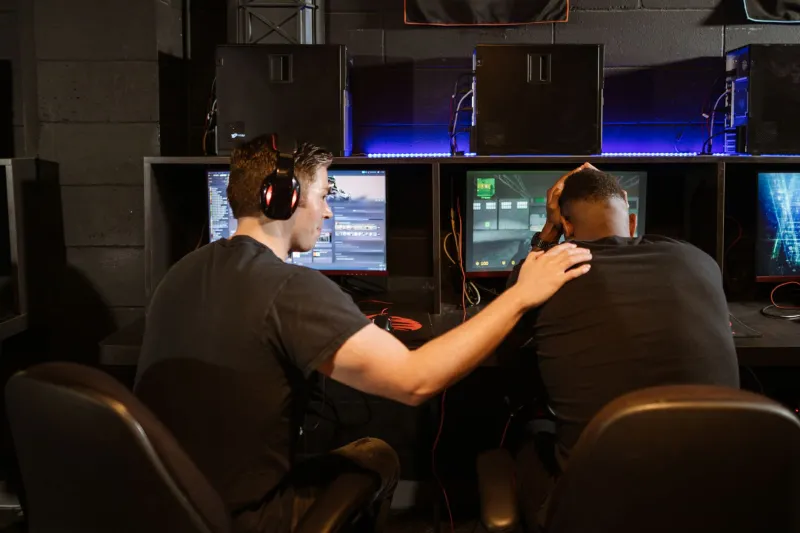
There's a version of this story that almost every serious competitive player knows personally. You joined a squad with real potential. You grinded scrims together, built chemistry, learned each other's tendencies. Then the results started slipping — and somehow, months later, you're still there. Still grinding. Still telling yourself it's about to click.
Loyalty is a virtue. In esports, though, it can also be a trap.
The uncomfortable truth that most players won't say out loud is this: staying too long with the wrong roster isn't just a career inconvenience. It's a compounding tax on your peak years — and by the time most players feel it, they've already paid more than they realize.
The Shelf Life Problem Nobody Talks About
Competitive gaming careers are short. Brutally short compared to traditional sports. The mechanical prime for most titles sits somewhere between the ages of 16 and 25, with a steep drop-off in reaction time and adaptability kicking in hard after that. That window isn't just about raw skill — it's the period when your learning curve is steepest, your reputation is most malleable, and your market value is at its highest ceiling.
When you spend 18 months grinding with a team that consistently finishes outside the top eight at regionals, you're not just losing prize money. You're losing developmental reps against elite competition. You're losing visibility with org scouts. You're losing the kind of high-pressure experience that actually reshapes how you process the game.
Time lost to a bad roster situation doesn't come back. That's the part players tend to underweight when they're in the middle of it.
Why Smart Players Stay in Bad Situations
This isn't about naivety. A lot of the players who stay too long are actually the most thoughtful, team-first competitors on the server. That's exactly the problem.
Fear of the unknown plays a massive role. The devil you know, right? Your current squad might be struggling, but at least you understand the dynamics. A new team means new personalities, new communication styles, new potential conflicts. That uncertainty is genuinely uncomfortable, and the brain is wired to prefer familiar pain over unfamiliar risk.
Social pressure and guilt are just as powerful. Esports rosters are small, tight-knit units. Leaving feels like abandonment — especially when teammates are friends. The player who starts putting out feelers for a new team gets labeled disloyal, and in a scene where reputation travels fast through Discord servers and community forums, that label stings.
Sunk cost thinking does the rest of the damage. You've already invested a year into this squad. You know their callout patterns, their tendencies under pressure, their off-days. Leaving means writing off all of that investment, and the human brain is spectacularly bad at accepting that kind of loss.
None of these are stupid reasons to stay. They're deeply human ones. But they're also reasons that have nothing to do with your actual competitive trajectory.
What Staying Is Actually Costing You
Let's get specific about the ledger, because most players only count the obvious stuff — tournament winnings — and miss the bigger picture.
Skill stagnation is the most underrated cost. Your ceiling as a player is heavily influenced by who you're competing against and alongside. A roster stuck in mid-tier circuits doesn't expose you to the read-and-react situations that elite players navigate every week. You get comfortable. Your growth plateaus. And you don't even notice it happening because your in-house metrics still look fine.
Mental load accumulates silently. Carrying a team that isn't performing — or worse, absorbing the dysfunction of teammates who aren't pulling their weight — is psychologically exhausting in ways that show up everywhere. Your focus outside of matches degrades. Your motivation to review VODs drops. Your overall investment in improvement quietly erodes because some part of your brain knows the effort isn't landing anywhere productive.
Market value erodes in real time. Org scouts and team managers aren't just watching your individual stats — they're watching your results. A talented player buried in a consistently underperforming lineup eventually gets categorized as a mid-tier player, regardless of their actual ceiling. Perception calcifies fast in competitive scenes, and reversing it takes years of consistent proof.
The Framework: Fight Harder or Find the Door?
Not every rough patch is a sign to leave. Rosters go through hard stretches, and the players who bail the moment adversity hits rarely build the resilience needed to win at the highest level. The question isn't whether things are hard — it's whether the conditions for growth still exist.
Here's a four-point check to run honestly:
1. Is the ceiling real or imaginary? Look at your roster's trajectory over the past six months, not the past six weeks. Are results trending upward, even slowly? Is the team identifying problems and actually fixing them? A ceiling that's moving is a reason to stay. A ceiling that's been static for two consecutive seasons is a structural problem, not a slump.
2. Are your teammates coachable? The single biggest predictor of a roster's long-term potential isn't current skill — it's how players respond to feedback and adversity. If you're watching teammates repeat the same macro mistakes after VOD reviews, deflect accountability in post-match breakdowns, or disengage when the going gets hard, that's not a talent gap. That's a culture problem. Culture problems almost never self-correct.
3. What does your individual development look like? Be ruthlessly honest here. Are you getting better? Are you being challenged in ways that force adaptation? If your skill growth has flatlined and you can trace it back to a lack of quality competition or a lack of team structure that pushes you, that's important data.
4. Have you actually communicated the problem? Before you start shopping yourself around, have you genuinely surfaced the issues with your team? Not vented — actually had a structured conversation about expectations, development goals, and what needs to change? A lot of roster stagnation persists simply because nobody wanted to have an uncomfortable conversation. Try the hard conversation first. If nothing moves after that, you have your answer.
Making the Move Without Burning the Scene
If the framework points toward a change, how you leave matters almost as much as when you leave. The US competitive scene — whether you're playing in Valorant circuits, League Amateur leagues, or third-party tournament ecosystems — is smaller than it looks. Relationships recycle. The teammate you ghost today is the tournament organizer you need access to in three years.
Leave with clarity, not bitterness. Give reasonable notice where contracts allow. Be honest about your reasons without being brutal about it. You can advocate for yourself without torching the people you played with.
And when you get to your next squad, bring everything you learned from the last one. The loyalty instinct isn't wrong — it's just misapplied when it keeps you anchored to a situation that's stopped serving your growth.
The Bottom Line
Your peak years are a finite resource. Every season you spend in a roster situation that isn't developing you is a season you're not getting back. That's not a reason to be mercenary or to abandon teammates the second things get hard. It's a reason to be honest — with your team, and with yourself — about whether the situation you're in is actually taking you somewhere.
MasterMeci's whole thing is helping dedicated players level up. And sometimes leveling up means being willing to change the team around you, not just the player in the mirror.