Carried by Nobody: How Your Teammates' Worst Habits Are Quietly Capping Your Rank
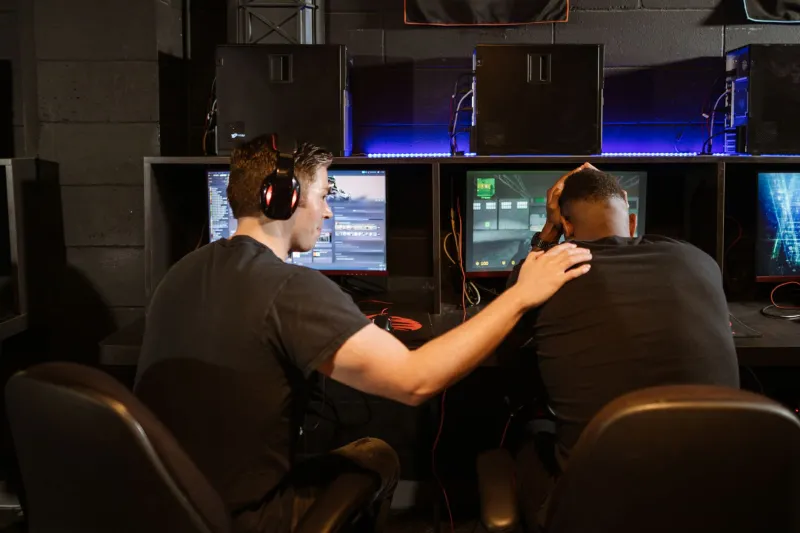
You hit every shot. You made the right call. You rotated when you were supposed to. And you still lost.
Sounds familiar? You're not imagining it. There's a very real phenomenon in competitive gaming where individual skill stops being the primary variable in whether you climb — and your teammates' habits quietly take over that role. It's frustrating, it feels unfair, and honestly, it kind of is. But understanding why it happens is the first step toward doing something about it.
Let's break it down.
The Myth of Pure Meritocracy in Solo Queue
Every competitive game's ranked system is built on a simple promise: play better, rank higher. And in a vacuum, that's true. Over a large enough sample size, the best players do float to the top. But here's the thing — most of us aren't playing a large enough sample size to outrun variance, and we're definitely not playing in a vacuum.
Solo queue is a team sport where you can't control your team. That's the core tension. And the players who climb consistently aren't just mechanically sharp — they've figured out how to navigate the team dimension in a way that minimizes how much other people's bad habits drag them down.
The players who stall out? They're usually doing one of two things: either blaming teammates for everything (classic deflection), or ignoring the team dimension entirely and just grinding mechanics without a strategy. Both approaches leave wins on the table.
Not All Teammate Flaws Are Created Equal
Here's something most players never stop to think about: there's a massive difference between a teammate habit that costs you games and a teammate habit that just annoys you.
Take a support player who never wards the river. Frustrating? Sure. But if you're playing a role that can compensate — if you can carry your own vision control or play around the information gap — that flaw might be workable. Now compare that to a tank who consistently breaks engages at the wrong time, forcing your whole team into a 4v5 they didn't agree to. That's a game-losing pattern that no amount of individual excellence can consistently overcome.
The framework here is simple: impact versus compensability.
- High Impact + Low Compensability = the habit that's actually capping your rank. This is the stuff you need to identify and build strategies around, or accept as a variance tax.
- High Impact + High Compensability = annoying, but manageable. You can build plays that don't rely on that teammate doing their job.
- Low Impact = noise. Stop fixating on it.
When you start watching your own losses through this lens, patterns emerge fast. You'll notice that certain game states keep showing up — not because of random bad luck, but because a recurring team behavior keeps creating the same losing condition.
Solo Queue Climbing Is a Different Skill Than Playing Well
This is the part that trips up a lot of high-skill players, especially those coming from organized team environments. In a structured team setting, your job is to execute your role as cleanly as possible and trust that communication and coordination will fill in the gaps. In solo queue, that trust is a liability.
Solo queue climbing requires what you might call adaptive leadership — the ability to read what your team is actually capable of in real time and steer the game toward win conditions that work within those constraints, not the ones you'd prefer in an ideal world.
That might mean abandoning an aggressive early strategy because you can see your teammates are passive and won't follow up. It might mean playing more conservatively when your team's communication is clearly breaking down. It sounds simple, but it runs directly against the instinct of skilled players, who want to execute their best game regardless of context.
The players who climb fastest in solo queue aren't always the most mechanically gifted. They're the ones who've gotten really good at reading team states and adjusting their personal game plan to fit the reality in front of them.
How to Tell If You're Actually Plateaued vs. Just Stuck in a Mismatch
This is probably the most important question in the whole article, because the answer changes everything about how you should respond.
A genuine plateau means your ceiling in the current meta, with your current skill set, is approximately where you're sitting. The fix is skill development — mechanical work, strategic depth, VOD review, the whole toolkit.
A toxic skill mismatch means your individual skill level is legitimately above your current rank, but you're caught in a pattern where team dynamics keep producing losses that your individual performance can't overcome consistently enough to climb. The fix here isn't more aim training — it's smarter queue management and in-game adaptation.
Here's a rough diagnostic:
-
Pull your last 20 losses and categorize them. How many were games where you performed at or above your personal standard? If it's less than half, you've got a personal skill problem. If it's more than half, you're looking at a team dynamic problem.
-
Track the recurring losing condition. Is it the same game state that keeps showing up? A specific phase of the game where things fall apart? If you see a pattern, it's almost never random.
-
Identify which role or position the problem is consistently coming from. You don't need to assign blame — just diagnose. Is the issue happening because of a specific team composition weakness? A communication breakdown? A decision-making pattern?
Once you've done that work, you can actually respond intelligently instead of just queuing up and hoping the matchmaking gods are kind today.
What You Can Actually Do About It
Okay, so you've diagnosed the problem. Now what?
Play around the floor, not the ceiling. Instead of building strategies around what your team could do if everyone played perfectly, build around what they're reliably doing. If your team consistently plays slow and reactive, find win conditions that reward that playstyle rather than fighting it.
Expand your role flexibility. The more roles you can play competently, the better you can fill gaps that your teammates leave open. This doesn't mean spreading yourself thin — it means having enough versatility to cover critical weak points when they show up.
Control the tempo of communication. A lot of team dysfunction comes from communication vacuums. Calm, clear, timely callouts — even simple ones — can stabilize a team that's starting to tilt. You don't need to be a shot-caller to be a stabilizing presence.
Accept the variance tax. Some percentage of your games will be unwinnable because of factors outside your control. The best players in the world lose games they shouldn't. The goal isn't to eliminate those losses — it's to make sure they're not eating a bigger share of your record than they should.
The Bottom Line
Your rank isn't just a reflection of how good you are — it's a reflection of how good you are within the team context you keep finding yourself in. That's a harder thing to optimize, but it's also where a lot of the untapped climb actually lives.
Stop asking "why am I losing" and start asking "what's the recurring pattern in my losses, and what can I actually control within it?" That shift alone will do more for your rank than another hundred hours of aim training.
The ceiling isn't invisible anymore. Now go break through it.