The Slow Burn: Reading Your Team's Emotional State Before It Torches Your Scrim
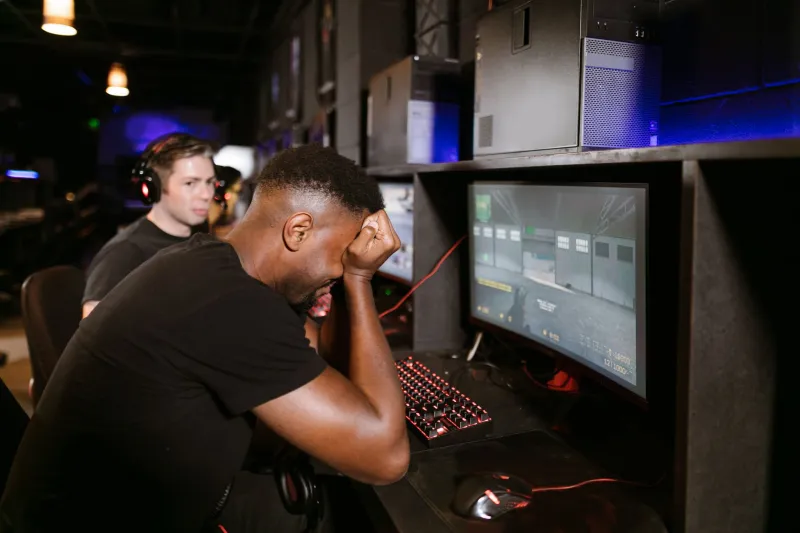
Every squad has seen it. A scrim block starts clean — good energy, sharp comms, crisp execution. Then one play goes sideways. Nobody says anything dramatic. Nobody rage quits. But something shifts. The callouts get shorter. The rotations get a half-second slower. Someone starts solo-queuing their decisions. And before you've identified what happened, you've dropped three straight maps and the session is cooked.
That's tilt — but not the obvious kind. Not the screaming, the blame, the muted mic. That kind is easy to spot and, in most organized teams, easy to address. The dangerous version is the slow burn: the quiet emotional deterioration that moves through a squad like smoke before fire, invisible until the damage is already done.
Understanding it — and getting ahead of it — is one of the most underrated competitive skills in team play.
Why Silent Tilt Is Harder to Manage Than Loud Tilt
When a player explodes, the problem is visible. The team can respond to it. Someone calls a pause, a shot caller checks in, the session resets. It's disruptive, but it's addressable.
Silent tilt works differently. It doesn't announce itself. It looks like a player who's "just focused" or "just tired." It sounds like slightly shorter callouts, slightly less proactive communication. It feels like a team that's still technically functioning but has lost the connective tissue that makes coordination feel fluid.
The reason it spreads is that emotional states in teams are contagious — this is well-documented in organizational psychology and increasingly recognized in esports performance research. One player's unspoken frustration creates a micro-shift in their behavior. Other players pick up on that shift subconsciously and adjust their own behavior in response. Nobody's aware it's happening. The whole team's emotional baseline drops without a single word being said.
By the time it's obvious, you're already in a hole.
The Behavioral Signals Worth Learning to Read
You can't read minds, but you can read behavior. Here are the specific patterns that tend to precede a full tilt cascade:
Callout compression. A player who normally gives full, contextual callouts starts going minimal. "They're mid" instead of "two mid, probably rotating to B." The information is technically there, but the detail and the intent are gone. This usually means they're processing something internally and pulling cognitive resources away from team communication.
Voluntary silence after a bad play. Not the natural pause, but the loaded one. If a player makes a mistake and goes completely quiet when they'd normally acknowledge it or make a quick joke, they're likely sitting with it harder than they're letting on.
Mechanical regression under pressure. A player suddenly makes a mechanical error they almost never make — missed skill shot, wrong cooldown timing, predictable movement. Under normal circumstances they'd execute that in their sleep. When it happens mid-scrim for no obvious reason, it's often a sign that mental load has spiked and is bleeding into execution.
Passive decision-making. The player who normally takes calculated risks starts defaulting to the safe play every time, even when the aggressive option is clearly correct. They're not playing it safe because it's strategic — they're playing it safe because they can't afford another mistake emotionally.
Intervening Before the Cascade
The goal isn't to become your team's therapist mid-scrim. That's not practical and it's not your job. The goal is to apply small, targeted interventions that interrupt the emotional spiral before it reaches critical mass.
Name the energy, not the player. Instead of calling out an individual — which almost always triggers defensiveness — call out the collective state. "Hey, energy feels a little flat, let's reset" is infinitely more useful than "[name], you seem tilted." One invites the whole team to recalibrate. The other puts someone on the spot and usually makes things worse.
Use a structured pause, not an open-ended one. When you call for a break, give it a clear length and a clear re-entry point. "Let's take three, grab water, come back and run a clean half" is different from "let's just pause for a second." Structure reduces anxiety. Open-ended pauses often just give people more time to stew.
Redirect with a technical focus. One of the most effective ways to interrupt emotional spiraling is to give the team something concrete and skill-focused to lock onto. Call a quick sync on a specific setup you want to run next map. Make the next thing to think about tactical, not emotional. This isn't avoidance — it's a functional reset.
Check in one-on-one, not in group comms. If you've noticed one player is clearly carrying something, a brief private message or a quiet word during a break is far more effective than a group check-in. Group check-ins can feel performative. A direct "you good?" from one teammate to another lands differently — it's personal, it's low-stakes, and it often gives the player permission to briefly acknowledge what they're feeling and move on.
Building a Team Culture That Reduces Tilt Accumulation
All of the above is reactive. The real competitive edge comes from building team habits that reduce the emotional pressure that creates tilt in the first place.
Normalize brief emotional check-ins as a standard part of scrim structure — not as a therapy session, but as a thirty-second calibration before a block starts. "How's everyone's headspace?" asked consistently, as a routine, removes the stigma from actually answering honestly.
Build a no-blame postmortem habit. If the team reviews mistakes in a way that consistently assigns fault to individuals, players will start protecting themselves emotionally by not taking risks. Shift the language to systemic: "What did we miss as a team" rather than "who made the mistake."
And take the slow burn seriously as a performance variable — because it is one. A team that can recognize and manage its collective emotional state in real time has a structural advantage over an equally skilled team that can't. In a close scrim block, in a tight tournament bracket, that advantage is often the margin.
Your opponents are preparing their strategies. Make sure your team is also preparing its psychology.