Punching Up Every Scrim Is Quietly Wrecking Your Tournament Results
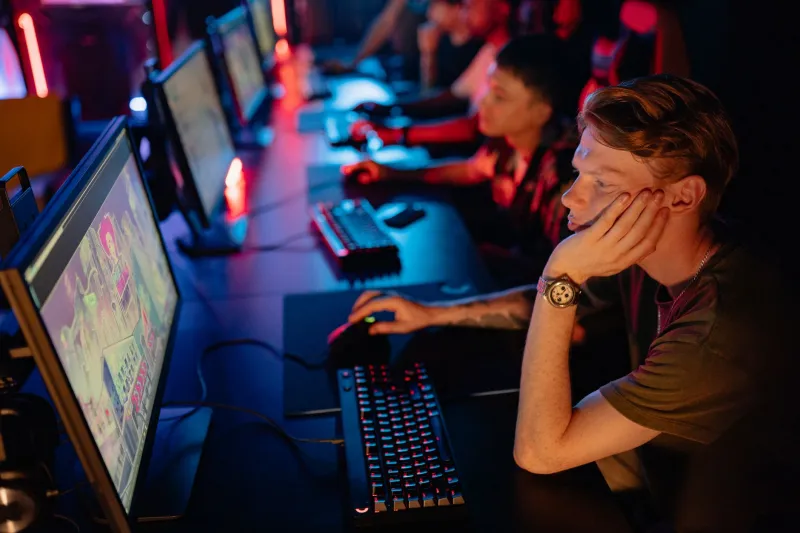
Every ambitious competitive team in the US scene has done it. You book scrims against the best opponents you can get access to, convince yourselves that losing hard against elite rosters is "building character," and then wonder why your tournament performance feels completely disconnected from all those hours of practice. Sound familiar?
Here's the uncomfortable truth that most coaches and team captains won't say out loud: constantly scrimmaging against teams who are significantly better than you isn't always the fast track to improvement. For a lot of mid-tier rosters, it's actually a slow leak that drains confidence, warps fundamentals, and leaves you completely unprepared for the opponents you'll actually face in a bracket.
The "Getting Cooked" Fallacy
The logic behind always punching up sounds solid on paper. If you practice against better competition, you get better faster. It's how it works in most sports, right? You spar with better fighters, you get sharper. You practice with better tennis players, your game elevates.
But esports competition has a wrinkle that makes this thinking break down fast: the skill gap in competitive gaming isn't just about reflexes or mechanics. It's about read patterns, decision trees, and team coordination that operates at an entirely different frequency when the gap between rosters is wide enough.
When your squad is getting dismantled by a team three tiers above you, you're not learning how to play better — you're learning how to survive a situation that will almost never come up in your actual competitive environment. Your macro decisions, your communication habits, your fallback rotations — all of it gets warped around an opponent whose baseline is so much higher that the lessons don't transfer cleanly.
What Bad Scrim Habits Actually Look Like
Let's get specific. Here's what consistently happens to mid-tier teams who stack their scrim schedule with top-tier opponents:
Overpassive default behavior. After weeks of getting punished for any aggressive move against elite teams, players start defaulting to ultra-conservative play. Then they bring that same passivity into tournament matches against teams at their level — and suddenly they're getting walked on by opponents who expect them to contest.
Communication breakdown under pressure. Against much better opponents, callouts start to feel pointless because the response time required to act on them is beyond the team's current capability. Teams gradually stop communicating as effectively, and that habit doesn't disappear when they step into bracket play.
False calibration of what "good enough" looks like. If your benchmark is always an elite team, a solid performance against a peer-level opponent starts to feel underwhelming. Players lose the ability to recognize when they're actually executing well, which messes with in-game confidence at exactly the wrong moments.
The Mid-Tier Breakout Blueprint
Some of the more interesting shifts in competitive strategy over the last few years have come from rosters who deliberately restructured their scrim diet — not by avoiding tough opponents entirely, but by getting intentional about the ratio.
One approach that's gained traction in NA Valorant and League circuits involves what some coaches call "mirror-level grinding." The idea is simple: the majority of your scrim blocks — roughly 60 to 70 percent — should be against teams within one clear tier of your own. You're not sandbagging. You're building the muscle memory and team coordination that actually applies to your competitive reality.
Teams that have leaned into this report a few consistent benefits. First, the feedback loop gets tighter. When you're playing against opponents at your level, a mistake in your rotation or a miscommunication on a site execute produces a result you can actually trace and correct. Against an elite team, mistakes get punished so fast and so completely that isolating the cause becomes nearly impossible.
Second, winning reps matter more than most people admit. There's real psychological infrastructure that gets built when your team experiences successful executes, clean rotations, and clutch moments against competitive opponents. That foundation is what holds together when a tournament bracket gets tight.
How to Structure a Smarter Scrim Block
This doesn't mean you should never book scrims against elite teams. Those sessions have value — just a more targeted kind of value than most players assume.
Here's a framework worth testing over a four-week practice cycle:
-
Weeks one and two: Heavy focus on peer-level scrims. The goal is fundamentals, clean execution, and building team cohesion. Review every session with the explicit goal of finding repeatable patterns you can fix.
-
Week three: Introduce one or two sessions against a clearly stronger opponent. Use these as diagnostic tools, not performance benchmarks. What specific reads are they making that you're not? What communication gaps get exposed under real pressure?
-
Week four (pre-tournament): Return to peer-level opponents. Sharpen your confidence, refine your setups, and enter the bracket with a team that has recent experience winning competitive exchanges.
The punch-up sessions are reconnaissance, not the main training block. That reframe alone changes how your team processes the losses.
The Confidence Variable Nobody Talks About
Competitive gaming has a mental component that's easy to dismiss when you're deep in a practice grind. But tournament performance is heavily influenced by what your team believes it's capable of — and that belief gets shaped by your scrim history.
A team that's lost 80 percent of its recent scrims to elite opponents walks into a tournament bracket carrying a very specific psychological weight. Even when the matchup on paper is winnable, the internal narrative has been conditioned toward loss. Players hesitate at decision points. Communication gets tentative. The team plays not to lose instead of playing to execute.
Contrast that with a team that's come into tournament week off a strong block of peer-level scrims. They've been winning reps. They've been executing cleanly. They walk into bracket play with a different baseline assumption about what they're capable of.
That's not delusion. That's calibration.
Stop Treating Scrims Like a Prestige Competition
The scrim trap is partly cultural. In a lot of competitive scenes, there's status attached to who you practice against. Getting top-tier teams to agree to sessions feels like validation. Turning down a scrim because the opponent is "too good" can feel embarrassing.
But if you're serious about tournament performance — and if you're reading MasterMeci, you probably are — you have to be willing to prioritize what actually works over what looks impressive on a team's Discord.
The best teams in any scene aren't just the ones with the most talent. They're the ones who practice with intention, build their fundamentals on a foundation that matches their competitive reality, and walk into bracket play with the confidence that comes from genuinely knowing what they can do.
Punching up every session isn't ambition. Sometimes it's just a very convincing way to stay stuck.