Don't Copy the Pros — Decode Them: A Smarter Way to Watch Pro Play
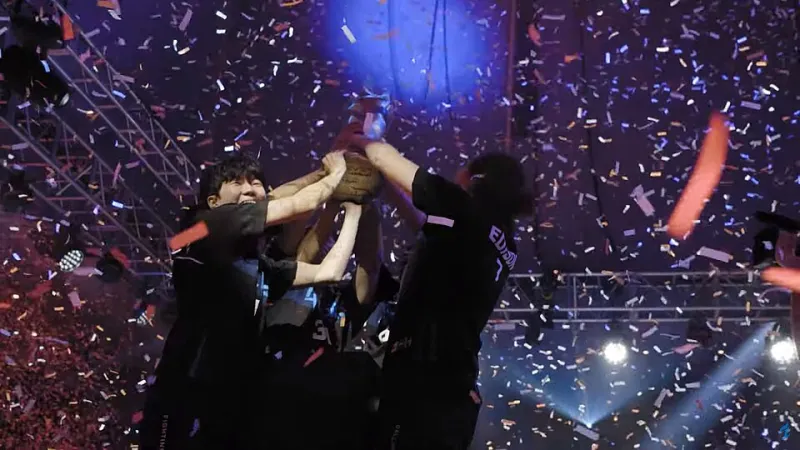
Photo: Dallas Fuel, CC BY 3.0, via Wikimedia Commons
The Copy-Paste Trap Nobody Talks About
Every week, millions of players load up Twitch or YouTube, watch their favorite pro absolutely dismantle lobbies, and then queue into ranked trying to run the exact same thing. And every week, it fails. Not because the pro was wrong — but because the viewer missed the entire point.
Watching pro play without a critical framework is like watching a Formula 1 driver take a hairpin turn at 140 mph and then trying to replicate it in your Honda Civic on the highway. The mechanics look the same. The context couldn't be more different.
At MasterMeci, we're all about squeezing every drop of competitive edge out of the resources you already have. And pro VODs? They're one of the richest resources out there — if you know how to actually use them.
Why Pros Get Away With Things You Can't
Let's start with the uncomfortable truth: a lot of what pros do only works because they're pros.
Take aggressive early positioning in a battle royale. A pro player with thousands of hours of game sense can push a risky corner because they've already processed three exit routes, two likely enemy positions, and the sound cue that told them the rotation was late. You're watching the output of that calculation — not the calculation itself.
When you copy the push without that mental model backing it up, you're not playing pro-style. You're gambling.
This is especially true for mechanical plays: the off-angle peek, the bait-and-punish combo, the unconventional draft pick. These moves look clean in the highlight reel, but they're usually the last step in a long chain of reads and setups that the camera never shows you.
The move isn't the lesson. The decision-making behind the move is.
Format Mismatch: The Silent Killer of Borrowed Strats
Here's something most players completely ignore: pro play happens in a totally different format than ranked queue, and that gap matters enormously.
In organized play — LAN events, league matches, tournament brackets — teams have access to opponent scouting, coordinated comms, and predetermined game plans. They're also playing against opponents who are similarly prepared. That changes everything about how a strategy is designed and executed.
A five-man coordinated push that looks unstoppable in a pro match requires all five players to have rehearsed the timing, the callouts, and the fallback options. Drop that same strategy into a solo queue lobby with four randoms and it's a disaster waiting to happen.
Beyond coordination, there's also the incentive structure. In tournament play, pros sometimes make deliberately conservative choices to avoid variance — protecting a series lead, not giving away information, or forcing opponents into uncomfortable positions over multiple maps. Those decisions can look passive or even wrong to a casual viewer, but they're rational within that specific context.
In ranked, your only job is to win this game. Borrowing a tournament-paced strategy into a single-elimination ranked match is a mismatch you'll pay for in LP.
How to Actually Watch Pro Play: A Framework
So what should you be doing instead of just vibing to the stream? Here's a practical approach that actually translates to ranked improvement.
Ask "why" before you ask "how." Before you try to replicate anything, pause and ask yourself what conditions made that play possible. What did the pro know that you didn't? What setup happened three minutes earlier that made this the right call? If you can't answer that, you're not ready to run the play.
Look for the failures, not just the highlights. This is the big one. The most valuable learning in any pro VOD happens when something goes wrong. When a pro's aggressive play gets punished, when a draft gets exploited, when a strategy falls apart — that's the game showing you its logic. Failures reveal the rules. Highlights just show you what happens when everything goes right.
Separate the player from the strategy. Some things pros do work because of who they are, not what they're doing. A hyper-aggressive playstyle might be optimal for a pro with 10,000 hours of mechanical training and a dedicated support system around them. The same approach for a player still developing fundamentals is just going to accelerate bad habits. Be honest about where you are in your development before you adopt someone else's style wholesale.
Watch players at your ceiling, not just the top. Pros at the absolute peak of competition are fascinating, but they can be hard to extract direct lessons from because the skill gap is so wide. Try watching players who are a tier or two above your current rank — semi-pros, streamers grinding out top ladder spots, or analysts breaking down mid-level play. The decision-making is still sharp, but the situations are closer to what you'll actually encounter.
The Outdated Habit Problem
Here's a sneaky one: pros can have bad habits too, and those habits can absolutely make their way into your game if you're not careful.
The esports world moves fast. Metas shift, patches drop, and what was optimal six months ago might be actively punished today. But pros — especially veterans — sometimes carry over old tendencies out of muscle memory or stubbornness. They survive it at the top level because their fundamentals are strong enough to compensate. You won't have that luxury.
This is why watching recent pro content matters, but so does cross-referencing it with community patch analysis and current tier lists. If you're watching a pro run a strategy that the broader community has already identified as outdated, you're not learning the meta — you're learning someone's comfortable habit.
Always timestamp your learning. When was this match played? What patch was it on? Did this strategy age well or did the meta move past it?
Turning Observation Into Action
The goal isn't to watch more pro play. The goal is to watch better.
After every pro VOD session, try to write down — even just in your phone's notes app — one decision that surprised you and your best explanation for why the pro made it. Then, one decision that failed and why you think it failed. This two-point debrief takes maybe five minutes and forces you to process what you watched instead of just consuming it.
Over time, you'll start building a mental library of conditional knowledge: in this situation, this approach tends to work because of X; in that situation, it falls apart because of Y. That's the actual competitive edge. Not the flashy play. The conditional understanding underneath it.
Pros aren't gods. They're players who've made enough decisions — right and wrong — that their pattern recognition runs faster than everyone else's. The good news is that pattern recognition is trainable, and critically watching pro play is one of the best ways to accelerate it.
Watch smart. Play smarter.